

Description
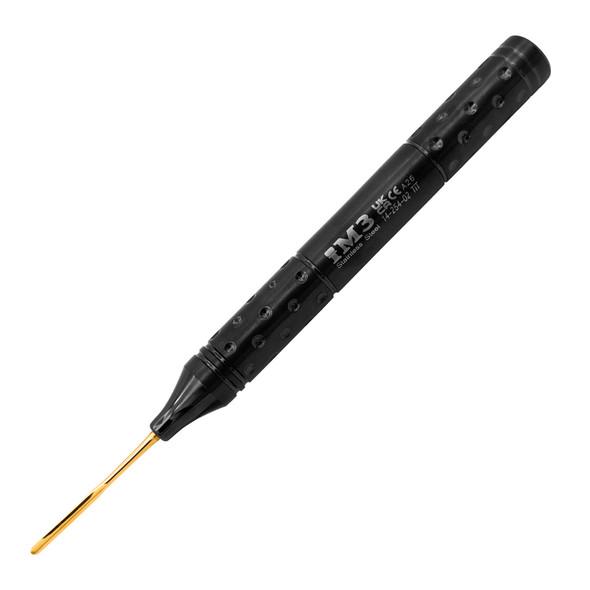
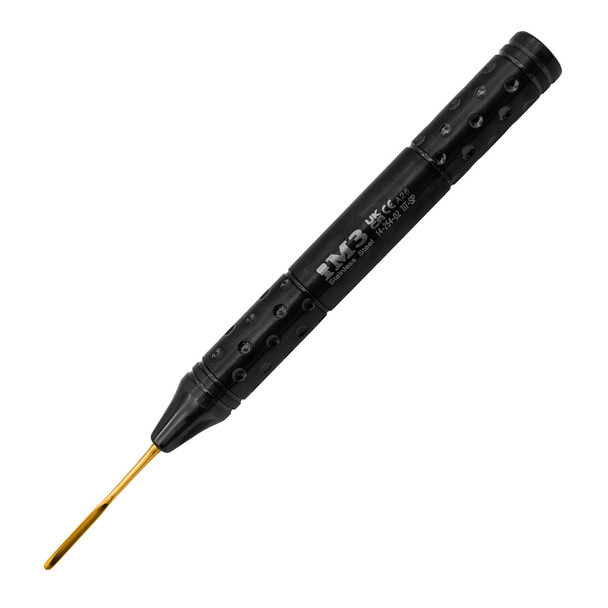
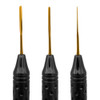
Narrow 2mm working tip ideal for small patients (cats, toy breed dogs) where the periodontal ligament space is tight with minimal disruption to surrounding bone and tissue.
The straight design provides direct apical access along straight root surfaces increasing surface area contact delivering consistent, even pressure along the root length.
The plain sharp edge is a smooth, unserrated cutting edge that is gentler on delicate tissues. Ideal for soft tissue and bone preservation. Produces a cleaner, smoother cut. May be preferred in cases involving inflamed, fragile, or compromised tissue.
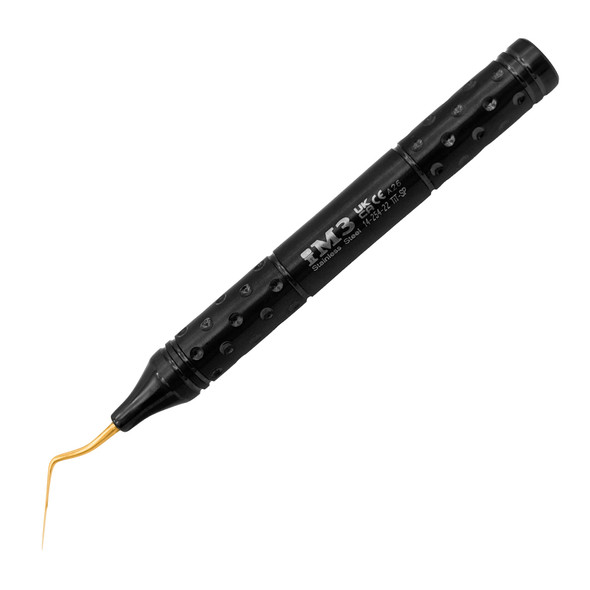
A flexible periotome is designed to sever the periodontal ligament with minimal trauma to the surrounding tissues. The flexible blade is inserted into the periodontal ligament space and is used in a rocking and rotating motion. The benefits of the flexible blade are that it follows the curve of the tooth root, helping to reduce the risk of root fracture, and damage to surrounding bone and adjacent teeth. The slight bending under pressure provides tactile feedback, so resistance can be felt and adjusted accordingly. This helps reduce trauma. They can be used first to help loosen the tooth in combination with luxators and elevators or independently depending on the extraction.
Working edge
Features
| ✓Flexible blade design — follows root curvature, reduces risk of root fracture and damage to surrounding bone | ✓Tactile feedback — slight bending under pressure so resistance can be felt and adjusted accordingly |
| ✓Gold coated tips — durable, maintains a sharp edge after repeated uses, corrosion resistant | ✓Smooth insertion into tight periodontal ligament spaces |
| ✓Black coated handle — non-slip ergonomic grip, non-reflective under surgical or loupes light | ✓Can be used first to loosen the tooth or independently depending on the extraction |
Suited to
| Cats & small dogs | Dental extractions |
Frequently asked questions
What is a flexible periotome and how does it work?
A flexible periotome is designed to sever the periodontal ligament with minimal trauma to the surrounding tissues. The flexible blade is inserted into the periodontal ligament space and is used in a rocking and rotating motion. The benefits of the flexible blade are that it follows the curve of the tooth root, helping to reduce the risk of root fracture, and damage to surrounding bone and adjacent teeth. The slight bending under pressure provides tactile feedback, so resistance can be felt and adjusted accordingly. This helps reduce trauma. They can be used first to help loosen the tooth in combination with luxators and elevators or independently depending on the extraction.
Serrated or plain edge — which should I choose?
The serrated tip is slightly more aggressive but provides an enhanced grip on the tooth root for tougher extractions — efficient and requiring fewer passes. The plain sharp edge is a smooth, unserrated cutting edge that is gentler on delicate tissues, ideal for soft tissue and bone preservation. It may be preferred in cases involving inflamed, fragile, or compromised tissue.
2mm or 3mm — which tip size do I need?
The 2mm tip is ideal for small patients (cats, toy breed dogs) where the periodontal ligament space is tight. The 3mm tip is designed for larger patients and teeth, covering more root surface area per pass — suited to medium to large breed dogs where the PDL space is wider and the roots are more substantial.
Can these instruments be autoclaved?
Yes. Clean the instrument immediately after use to prevent debris from drying on the surface. Standard autoclave sterilisation is recommended. Follow your practice’s sterilisation protocol and the instrument manufacturer’s guidelines.
Can these periotomes be sharpened?
No. The periotomes have a specialised coating that keeps the edge performing consistently over time. Sharpening would wear this coating off, so they should not be sharpened.